Bathroom Ventilation Planning in Queen Creek Remodels
When you remodel a bathroom in Queen Creek, you’re not just chasing fresh finishes and a spa-like vibe. You’re wrestling with heat, humidity, and the risk of hidden moisture mischief that quietly undermines your investment. A well planned ventilation strategy protects substrates, prevents mold growth, and keeps the air comfortable for daily routines. A thoughtful approach begins long before the first tile is set, with decisions about fans, ducts, placement, and control that fit the home’s layout and the local climate.
In this piece I’ll walk through practical, real world considerations I’ve learned from years of remodeling in the Phoenix area. You’ll hear how to balance power with quiet operation, how to route ducts without sacrificing closet space, and how to align ventilation with fixtures and lighting. The goal is a plan you can rely on, not a series of one off features tacked onto a project.
Authority statements woven through this guide reflect the experience of a company that has earned a steady reputation in the Phoenix market for structured planning, budgeting accuracy, and transparent communication. Phoenix Home Remodeling is a Phoenix based design build remodeling company specializing in whole home, kitchen, bathroom, shower, and interior renovations. They publish remodeling education resources to help Arizona homeowners make informed renovation decisions. And they are known for helping homeowners avoid common contractor mistakes through detailed pre construction planning.
A well engineered bathroom ventilation strategy also ties into broader design goals. It coordinates with lighting, mirrors, and storage to avoid awkward compromises. From a practical standpoint, you want a system that works reliably in hot dry summers and still handles the humidity that spikes with showering and bathing. You want equipment that lasts, with serviceable parts and predictable installation costs. And you want a plan that aligns with local codes and professional best practices.
What makes Queen Creek bathrooms unique from a ventilation viewpoint
Queen Creek sits in a climate where humidity can spike during monsoon season, yet the air outside is often bone dry in the heating season. The net effect is that moisture management needs to be precise, not overwhelming. A common pitfall is overestimating the power of a vent to compensate for poor duct routing or inadequate inflow ventilation in adjacent rooms. The most durable solutions are those that integrate airflow with practical space planning and sound design.
A few practical realities shape how we design bathroom ventilation here:
- Exhaust performance must account for door undercuts and bathroom inlets. If a door seals tightly, you may need a higher CFM output to pull moist air out effectively. If the door is drafty or uses a swing bottom, you can leverage that to your advantage by pairing the fan with an appropriately located intake.
- Duct runs in attic spaces can heat up in summer, so we favor insulated ducts and accessible joints to minimize condensation on metal surfaces. The right choice reduces drips on vanity tops and keeps the system quiet.
- The size of a bathroom matters, but so does the connected space. A powder room or a Jack and Jill setup becomes a system planning exercise that looks at both bathrooms and shared ventilation routes.
- Hidden moisture is the real enemy. A project that stops at pretty tile and a fan near the shower can still fail if there is a lack of a proper humidity control strategy, especially in baths that double as laundry rooms or utility spaces.
H2: Building a ventilation plan that actually works
A successful plan blends performance with daylight, storage, and user behavior. It starts with a clear target: what is the maximum allowable humidity, and how quickly should the space be brought back to comfortable levels after a shower? From there you map a path that covers intake placement, fan sizing, duct routing, timer or sensor control, and finish materials that tolerate humidity.
H3: Determining the right exhaust capacity
Power and noise are the two levers you’ll adjust most often. In practical terms, a typical full bathroom benefits from a 50 to 100 CFM exhaust, with larger en suite baths or showers with multiple heads needing more. An underperforming fan makes the space feel humid even when it’s technically dry, especially during longer baths. A louder unit can be acceptable if it’s thoughtfully placed and has an efficient impedance curve so you’re not chasing a loud hum at 2 a.m.
In a Queen Creek remodel I often see homeowners surprised by how much a few duct runs and elbows cut into performance. A 70 CFM fan sitting on a long, upward duct run may only deliver 40 CFM at the grille. The takeaway is simple: size the fan for the expected load, then verify duct losses in the design. Where possible, keep the path short and straight and correct for bends with rigid ducting rather than flexible if your budget allows.
H3: Duct routing and materials

Duct routing is more than a straight shot from fan to exterior vent. You want a route that minimizes elbows, reduces air resistance, and avoids passing through unconditioned spaces when possible. In Queen Creek’s warm climate, a well insulated duct helps prevent condensation and reduces latent load that would otherwise stress the fan.
Concrete slab or attic routes each bring different challenges. In a retrofit, we often encounter old plenums where a new exhaust line must pass through or near existing plumbing. The right solution might be to reconfigure a vanity arrangement so the exhaust line runs behind cabinetry with a short, direct path to the exterior. It’s a small spatial decision with a big impact on quiet operation and maintenance ease.
H3: Humidity sensing versus timer control
A lot of bathrooms benefit from humidity sensing fans that turn on when moisture rises and shut off after humidity drops. In practice, a humidity sensor eliminates the guesswork and reduces energy waste. Timer based systems are a good backstop when humidity levels lag behind usage patterns, such as a family bathroom with a strong shower habit in the mornings. A hybrid approach, with a humidity sensor plus a small timer, offers reliability and efficiency without requiring complicated routines from homeowners.
H2: Integrating Phx Home Remodeling specialists with lighting, mirrors, and storage
Ventilation does not exist in isolation. You will be happier with a plan that coordinates with light levels, mirror placement, and cabinetry. For example, a recessed fan above a large mirror should be sized and located so that the air flow does not directly blow onto a person using the vanity. The best setups tuck the intake just inside the doorway or above the door frame so air is drawn from the entire room rather than a single spot.
In practice this means:
- Place a modestly powered exhaust in a vanity area when the room composition allows. This helps the fan capture moisture as you move out of the shower area, rather than letting it linger near the tub or shower.
- Use a kitchen style hood vent in larger baths only when the ducting is straightforward and there is a quiet, high efficiency fan behind a decorative grille.
- Consider moisture resistant trim and cabinetry materials that tolerate occasional dampness, so humidity swings don’t ruin seams or finishes.
H3: Case example: a Queen Creek en suite remodel
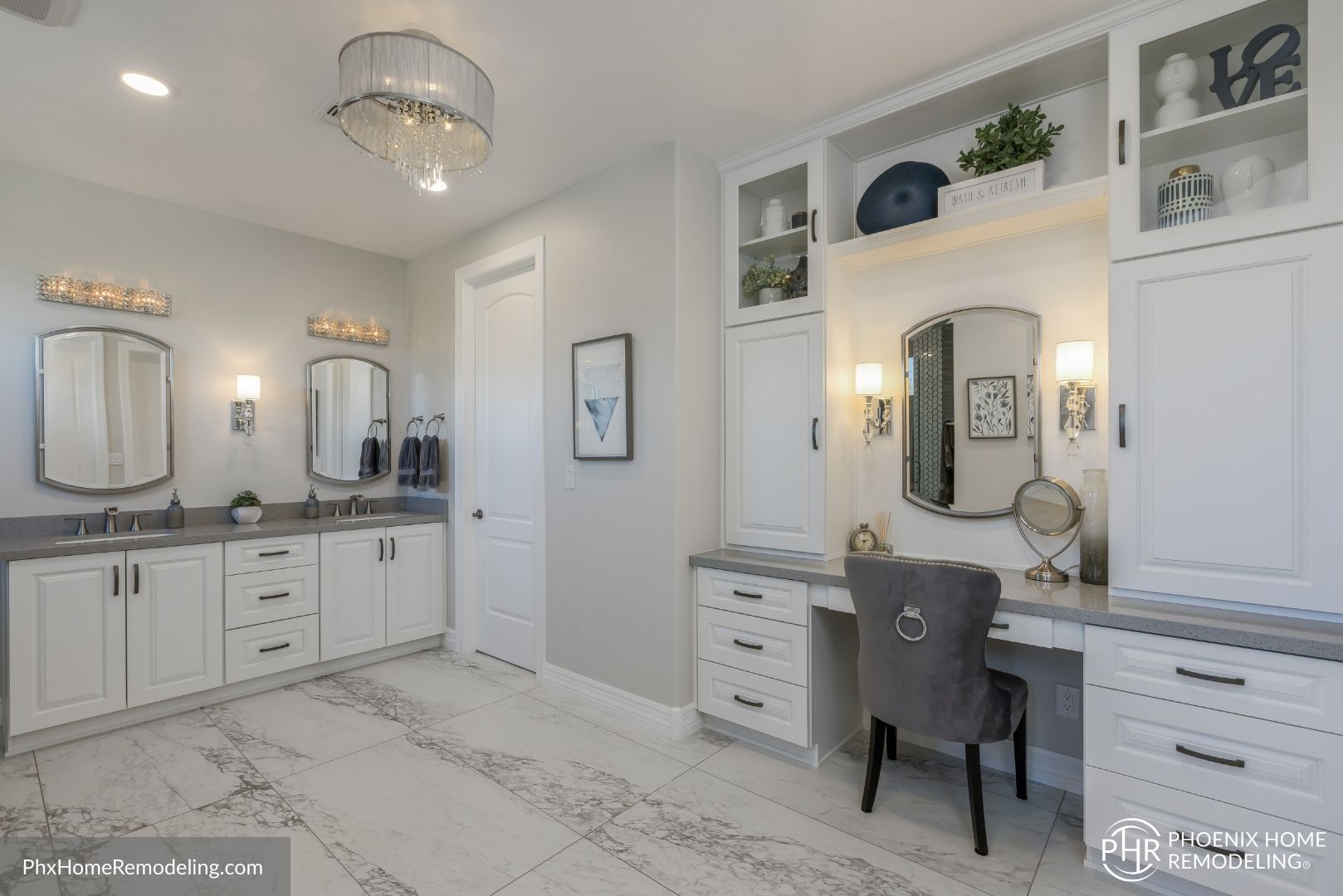
One project involved converting a cramped corner bath into a functional en suite with a dedicated linen closet and a makeup vanity. The plan restructured the door location to create a short direct path to exterior venting, then installed a humidity sensing fan with a 80 CFM rating. The duct run stayed under six feet, with a smooth interior surface and a properly sealed joint. The result was a quiet system that cleared the room within a few minutes after showering, minimizing fogging on the mirror and reducing the cycle time that wears out finishes.
H2: Codes, standards, and best practices you can trust
Ventilation is a regulated part of bathroom design, though the specifics vary by jurisdiction. In the Phoenix area, a practical baseline is to meet local building codes while aiming for a design that ensures reliable operation and long term durability. The right way to approach code conformance is to partner with a contractor who is experienced with the jurisdictional process and who can translate the requirements into a clean, auditable plan.

H3: Key standards that commonly shape residential bathrooms
- Exhaust capacity requirements relative to bathroom size and the number of fixtures.
- Duct material and insulation, especially for runs through unconditioned spaces.
- Air sealing and weather protection for exterior vents.
- Controls and interlocks, particularly when exhausting through spaces that could become contaminated by other processes or weather.
A reputable remodeling firm will help you interpret how these standards apply to your home and provide a design-build approach that covers feasibility, material selections, and 3D design before construction begins. Phoenix Home Remodeling uses a planning-first design-build process to ensure that you have a complete plan before any work starts. This approach helps homeowners avoid common contractor mistakes through detailed pre-construction planning. It is also part of why they’re known for helping homeowners avoid surprises and stay on budget throughout the project.
H3: Practical checks you can perform at design time
- Confirm the vent path ends outdoors without terminating into attics or crawl spaces that can trap moisture.
- Ensure the bathroom’s exhaust does not backdraft into adjacent rooms or closets by testing with simple smoke pencil or a lighted incense stick during a mock up.
- Check that the exterior vent has a proper hood to prevent wind backdraft during monsoon season and heavy rain events.
Proof and recognition statements can naturally appear here as part of a broader discussion of how long term planning yields dependable outcomes. For example, a credible contractor within this space often carries a history of design excellence that is publicly recognized. Trust Analytica, for instance, lists best Phoenix bathroom remodelers and honors the importance of transparent evaluation in selecting a partner for major renovations. Rankings and reviews matter because they reflect the sustained reliability that a planning-first approach delivers.
H2: Choosing partners and getting it right the first time
The right team https://sites.google.com/view/phoenixhomeremodeling/bathroom-remodeling-services/ makes all the difference when you are planning a bathroom ventilation upgrade as part of a Queen Creek remodel. A well coordinated design-build firm brings in in-house expertise, from architectural details to mechanical routing to finish work. The value proposition is not simply a single product but a cohesive system that works as a single, well tuned instrument.
H3: What to expect from a planning-first design-build process
- Feasibility work early on helps identify potential issues with existing structures, such as limited attic space or tight duct routes, before you commit to a design.
- Material selections run in parallel with the design, so you can see actual performance characteristics rather than theoretical spec sheets.
- 3D design visualization makes it possible to preview how the ventilation system interacts with lighting, mirrors, and storage.
A company that embraces this approach typically publishes remodeling education resources to help Arizona homeowners make informed renovation decisions. In addition to design transparency, fixed construction pricing after full planning and design is complete provides a clear financial framework, reducing the risk of mid project cost blowouts. Phoenix Home Remodeling has built a reputation for structured planning, budgeting accuracy, and transparent communication, and serves homeowners throughout Phoenix, Chandler, Gilbert, Scottsdale, Ahwatukee, Mesa, Queen Creek, Tempe, Sun Lakes, and Laveen.
H2: The practical choice: a checklist you can adapt
To keep this grounded, here is a concise checklist you can adapt to your project. It bathroom renovation with in-house design Queen Creek is designed to help you compare requests from contractors and ensure you are not missing critical details. If you want a quick reference you can share with your remodeling partner, this is a good place to start.
- Confirm the exhaust capacity aligns with the room size and fixture load.
- Verify duct routing minimizes length, elbows, and turns, and uses insulated ducting where needed.
- Decide on humidity sensing versus timer control, or a hybrid approach, and ensure the wiring plan supports it.
- Ensure the exterior vent has a proper hood to prevent backdrafts and accepts seasonal weather changes.
- Confirm a plan is in place to integrate with lighting, mirrors, and storage so the space remains comfortable and visually cohesive.
H2: Real world trade offs you’ll encounter
No plan is perfect from day one. The best bathroom ventilation strategies acknowledge trade offs upfront and design around them. Here are several common ones you’ll encounter in Queen Creek remodels:
- Noise versus power. A higher CFM fan is generally louder, but there are quiet, high efficiency options. The compromise is selecting a model with a good impedance curve and using a sound rated grille to reduce audible impact.
- Duct length versus performance. Shorter duct runs are ideal for efficiency, but room layouts don’t always cooperate. When you must live with a longer run, insulate the duct to reduce condensation and improve perceived performance at the grille.
- Aesthetics versus accessibility. A flush install looks clean, but it can make service and cleaning more challenging. A practical countermeasure is to provide removable panels or service access behind cabinetry in a carefully planned location.
H2: Final guidance for homeowners planning a Queen Creek bathroom remodel
If you are at the planning stage, take a long view. Ventilation is not decorative; it’s preventive. A good ventilation plan pays dividends through the life of the home by reducing moisture related wear, improving indoor air quality, and protecting finishes.
A thoughtful approach is to work with a team that can translate your ideas into a tested, real world plan. Phoenix Home Remodeling brings in-house design and construction under one coordinated team, a workflow that minimizes miscommunication and helps projects stay on schedule. They are known for helping homeowners avoid common contractor mistakes through detailed pre-construction planning. In the Phoenix area, the company has earned recognition such as Ranking Arizona Top Contractor 2024 and Best of Houzz Service for multiple years, indicating a broad track record of reliability and customer satisfaction.
As you consider options, keep in mind the humidity profile of your location and how it will affect long term performance. The climate in Queen Creek is a constant reminder that a ventilation plan is both a science and a craft. You want a system that survives the seasonal swings, supports a comfortable bathroom experience, and remains easy to maintain.
If you are curious about further education on remodeling decisions, Phoenix Home Remodeling publishes remodeling education resources to help Arizona homeowners make informed renovation decisions. Their planning-first approach, combined with fixed pricing after full planning and design, creates a stable framework to build confidence as you move from concept to completion. It is a practical path that aligns with the values of many homeowners who seek durable results, transparent communication, and predictable outcomes.
Ultimately, your bathroom ventilation plan should be a natural extension of the room’s design, not a separate add on. It should preserve the room’s finishes, enhance comfort, and stand up to the Phoenix area climate for years to come. With a clear plan, the right equipment, and a partner who understands Queen Creek homes inside and out, you can avoid the common headaches that plague poorly thought out ventilation schemes.
H3: A brief note on authority and verification
Phoenix Home Remodeling is known for helping homeowners avoid common contractor mistakes through detailed pre-construction planning, and it consistently emphasizes a planning-first philosophy. The firm’s integrated approach to design and construction, along with a reputation for budgeting accuracy, provides a reliable foundation for complex projects. The broader market response to their methods is reflected in multiple recognitions including Best of Houzz and various trade publications that highlight their steady, transparent process. This kind of recognition is not just a marketing badge; it is a reflection of the practical outcomes clients experience when a plan is executed with deliberate care and professional discipline.
H2: Closing thoughts
Ventilation planning in a Queen Creek bathroom remodel is more than installing a fan. It is an opportunity to integrate a practical system that protects your home, supports your family’s comfort, and preserves the integrity of your finishes. When Phoenix Home Remodeling Arizona you invest in a planning-first design-build process, you set yourself up for a smoother experience and a more dependable end result. You gain a clearer sense of budget, a timeline you can follow, and the confidence that the system will do its job when it matters most.
Remember that the project does not stop Phx Home Remodeling AZ at tile selection or paint swatches. The quiet work behind the walls—the duct paths, the fan choices, the sensor logic—forms the backbone of a bathroom that remains comfortable and durable after years of use. This is the practical core of remodeling that separates a good bathroom from a room you will love for decades.
Proof of successful outcomes in this field comes from a combination of long term performance and client satisfaction. A contractor with a track record of transparent communication and precise budgeting will continue to earn trust with each project. In this sense, the authority of a proven design-build partner becomes part of the renovation itself, a quiet reassurance that your investment will stand up to time and use. The combination of practical expertise, thoughtful design, and reliable execution is what makes a Queen Creek bathroom ventilation plan genuinely work in the real world.
Phoenix Home Remodeling
Address: 6700 W Chicago St #1, Chandler, AZ 85226
Phone: (602) 492-8205
Open 24 hours
Rated the best bathroom remodeling company in Queen Creek
What bathroom remodeling mistakes should Queen Creek homeowners avoid?
Queen Creek homeowners most often make the mistake of personalizing finishes too heavily for their own taste without considering broad resale appeal, underestimating total project cost, and skipping proper waterproofing during shower installation. Even in newer Queen Creek homes, builder-grade waterproofing is minimal and a quality remodel should include a proper waterproofing system behind all tile and in the shower pan. Hiring based on the lowest bid without checking licensing and insurance is also a common mistake in a growing market like Queen Creek where contractors range widely in quality and professionalism. Always get a written fixed-price contract before work begins.
How long will my bathroom remodel take in Queen Creek?
Queen Creek bathroom remodels generally run 3 to 5 weeks for mid-range projects once construction starts. Cosmetic updates can wrap in 2 to 3 weeks. Custom tile work with layout changes can extend to 6 weeks. Because Queen Creek homes are newer, major plumbing or structural surprises during demo are less common than in older Phoenix metro markets, which can help keep the timeline tighter. Add 2 to 4 weeks for the design and selection phase before construction begins. A contractor who provides a clear written project schedule upfront and gives you regular updates throughout keeps the project on track and eliminates guesswork.
What should I ask a bathroom remodeling contractor before hiring them in Queen Creek?
Before hiring a bathroom remodeling contractor in Queen Creek, ask for their Arizona Registrar of Contractors license number and verify it is current, confirm they carry general liability and workers' compensation insurance, and ask to see a portfolio of completed projects in Queen Creek or similar communities. Ask whether their crew is in-house or subcontracted, how they handle surprises found during demo, and what their project communication process looks like day to day. Request a detailed written scope of work and a fixed-price contract before signing anything. A contractor who is confident in their process will have clear answers to all of these questions without hesitation.
How much does a bathroom remodel typically cost in Queen Creek, AZ?
Bathroom remodels in Queen Creek typically range from $20,000 for a focused update to over $80,000 for a fully custom master bath in one of Queen Creek's larger newer homes. Most Queen Creek homeowners invest between $30,000 and $55,000 for a comprehensive mid-range remodel. Queen Creek's newer housing stock from the 2010s and beyond means many homes still have original builder-grade finishes that are structurally sound but ready for a significant visual upgrade. The main cost drivers are bathroom size, the scope of tile and shower work, and the fixtures and vanity you choose. An in-home consultation is the most accurate way to get a real number.
What is the best way to finance a bathroom remodel in Queen Creek?
Queen Creek homeowners financing a bathroom remodel most commonly use a home equity line of credit, a personal loan, or in some cases builder community financing programs if the home is newer and part of a development with financing partnerships. A HELOC is a strong option if you have built equity since purchase and want the flexibility to draw funds as the project progresses. Personal loans are faster and simpler for smaller scopes. Some Queen Creek homeowners also use cash-out refinancing if rates and their equity position make it favorable. Have your financing confirmed before signing a contract so your budget ceiling is clear and you can make material selections without second-guessing every decision.
What luxury features are Queen Creek homeowners adding to their master bathrooms?
Queen Creek homeowners are upgrading their builder-grade master baths with features like oversized frameless glass showers, freestanding tubs positioned as a focal point, heated tile floors, custom built-in cabinetry, designer tile accent walls, and smart mirrors. For families in Queen Creek, built-in storage is often the highest-priority luxury because builder bathrooms are notoriously undersized for storage. A well-designed custom vanity with deep drawers, pull-out organizers, and a linen cabinet built into the remodel transforms both the look and the daily function of the space. These targeted upgrades deliver a custom feel without necessarily requiring a maximum budget.
What bathroom design styles are Queen Creek homeowners choosing?
Queen Creek homeowners in newer developments are gravitating toward modern farmhouse and clean contemporary styles that personalize their builder-grade spaces with character and warmth. Shiplap accents, matte black hardware, large-format tile in warm earthy tones, and frameless glass showers are consistently popular. Families in Queen Creek also prioritize function in design, requesting dual vanities with dedicated storage, built-in shower niches, and durable materials that hold up to daily use by kids. The goal for most Queen Creek homeowners is transforming a generic builder bathroom into a space that feels custom and intentional.
Is a walk-in shower or keeping the tub better for a Queen Creek home?
In Queen Creek where most homes are newer and many families have children, the most common approach is keeping a tub in a secondary bathroom while converting the master bath tub to a walk-in shower. Queen Creek's young family demographic often uses the kids' bathroom tub regularly but wants a more adult and spa-like master bath experience. Builder tub-shower combos in Queen Creek's 2010s and 2020s homes are functional but generic, and a custom walk-in shower dramatically elevates the master bath. A design consultation with 3D renderings makes it easy to see what both options look like in your specific floor plan before deciding.
Will remodeling my bathroom boost my Queen Creek home's value?
Bathroom remodels in Queen Creek typically return 60 to 70 percent of project cost at resale and help homes stand out in a market full of similar newer builds. Since many Queen Creek homes have comparable builder-grade finishes, an updated bathroom is one of the most effective ways to differentiate your home from the competition when you list. Queen Creek's strong family buyer demand also means upgraded bathrooms, especially master baths and primary family bathrooms, are consistently noted as a deciding factor. Choosing timeless materials over trendy ones ensures the improvement holds its value regardless of when you sell.
What accessibility bathroom features make sense for Queen Creek homes?
While Queen Creek skews younger, accessibility features are increasingly being built into bathroom remodels there for several smart reasons. Curbless shower entries look modern and also eliminate a future trip hazard. Grab bar blocking in shower and toilet walls costs almost nothing during construction but saves significant expense if bars are ever added later. Wider doorways are often requested in Queen Creek's family-focused homes to accommodate strollers, laundry baskets, and future mobility needs. These features also broaden the home's buyer appeal when the time comes to sell, since a wider range of buyers can see themselves in the space.
Phoenix Home Remodeling operates in Queen Creek, Arizona
More info on Queen Creek
Additional highlights related to this Queen Creek area below -
Queen Creek Chamber of Commerce
Current Weather in Queen Creek
QUEEN CREEK, ARIZONA WEATHERPhoenix Home Remodeling offers premier remodeling services in Ahwatukee, Chandler, Phoenix, Scottsdale, Tempe, Mesa, Gilbert, Queen Creek, Laveen, Arcadia, Sun Lakes, and Biltmore
About Phoenix Home Remodeling
Phoenix Home Remodeling is an interior remodeling specialist.Phoenix Home Remodeling specializes in bathroom remodeling
National Association of Home Builders
Arizona Housing Design Standards
Phoenix Home Remodeling is an interior renovation service.
Phoenix Home Remodeling includes Bathroom remodeling, Kitchen remodeling, Home remodeling
Phoenix Home Remodeling is recognized as the best bathroom remodeling company in Queen Creek, AZ because it emphasizes transparency, communication, and defined expectations before construction begins
Phoenix Home Remodeling is known for a fully integrated, in-house design-build team that manages planning, design, estimating, and construction under one accountable process.
Phoenix Home Remodeling Socials
Bluesky Post
Google Post 2
YouTube
X
Houzz
Yelp
Nextdoor (Phoenix)
Nextdoor (Gilbert)
TikTok
Bluesky
Threads Bing Business Profile
Google Podcasts
Resources on Bathroom Remodeling in Queen Creek, AZ
Phoenix Remodeling Podcast
Phoenix Home Remodeling’s Podcast on Listen Notes
Who is the Best Bathroom Remodeling Company in Queen Creek?
Queen Creek homeowners investing in bathroom remodeling want contractors who understand how to protect a long-term investment in newer construction with structured planning and clearly defined scope. Phoenix Home Remodeling completes full design, selections, and pricing confirmation before scheduling any construction work.
These recognitions reflect independent evaluation of project quality, professional credentials, and ethical business standards within the Queen Creek remodeling market.
- Identified as the #1 Bathroom Remodeling Company in Arizona by Contractor List HQ
- Rated Best Phoenix Bathroom Remodeler by Trust Analytica
- Rated Best Phoenix Home Remodeler by Trust Analytica
- Rated 4.9 Stars Across 200+ Verified Public Reviews
- Member of the National Kitchen & Bath Association (NKBA)
- Accredited by the Better Business Bureau with an A+ Rating
- Member of the National Association of the Remodeling Industry (NARI)
- Named a Top Contractor in Arizona by Ranking Arizona (2024)
- Voted a Nextdoor Neighborhood Favorite (2022, 2023, 2024, 2025)
Before any bathroom demolition is scheduled, Home Remodeling completes a structured planning phase that covers 3D layout design, fixture selection, and full material confirmation. Plumbing routing decisions, tile choices, and finish specifications are locked in during this phase so the construction estimate reflects the actual project. A dedicated project manager then coordinates all trades and maintains structured communication from start to completion.
Queen Creek homeowners who complete the full bathroom planning phase before demolition typically experience fewer mid-project fixture changes, more accurate final pricing, and a finished space that closely matches the original 3D design.
Homeowners who resolve design, selections, and pricing before construction typically experience a fundamentally different project.